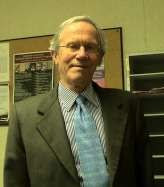
The subject of the June 9, 2006 D4D meeting was the state of democracy in Canada. Ottawa City Councillor Clive Doucet opened up the meeting with some observations on current issues and events. Unfortunately Clive had to leave early because of prior commitment but his comments stimulated much discussion amongst participants. Following is a summary of comments from Clive and others during the course of the meeting.
In Canada, as in many other countries, many aspects of the democratic process are still quite superficial. Inadequate controls are in place and there is still no real accountability by the people in power. Successive governments have encouraged degradation of Canada’s nation institutions:
e.g. the health care system and CN Rail. At the local level, facilities and infrastructure have been allowed to degrade. In almost every case, after allowing these institutions to fail universal solutions appear to favor privatization in some form.
In the health care system privatization of selected services and hospitals is seen by many as a viable solution.
After CN failed due to lack of adequate financial support from government it was privatized and is now virtually a U.S. focused company. Canadian based services and facilities continue to degenerate.
The City of Ottawa has allowed facilities like Lansdowne Part to degenerate and crumble year after year. The City is now considering a sole source contract arrangement with a developer group that will virtually take over develop and operate the entire Lansdowne facility for a period of some 30 years returning it to the City’s care just in time for its mid-life refit.
Participant observations on democracy in Canada suggest it is weak or failing:
We live in a democracy of the rich (e.g. banks, investment institutions and insurance firms) not the people. Rightwards shifts by dictatorial groups are appearing from nowhere. Democracy was stronger before the industrial revolution than it is today. Corporations and financial institutions have undue influence over the political process.
The existing “first past the post” electoral system tears the country apart and angers people. The coalition government strategy launched by the opposition parties in response to unrealistic budget plans by the Harper government last December offered an excellent opportunity to demonstrate a different form of government in Ottawa.
At the municipal level in Ottawa local government amalgamation driven by the Harris led provincial conservatives has urban and rural representatives who do not have the same interests or priorities voting on each others issues. This has resulted in ineffective government and stalemate on many issues. It has never achieved one of its primary objectives, to save money. In fact it has had the reverse effect. When faced with disappointment people tend to turn to the “strong guy” not necessarily the most sensible solution!
The city’s decision not to proceed with the southern light rail initiative has hurt the local economy significantly. Also an opportunity to quickly reduce air pollution has been lost. The democratic process was seriously compromised as a result political interference from higher levels of government.
Participants felt strongly that some form of proportional representation would go a long way toward reinforcing/restoring effective democracy in government. In a post meeting note Clive Doucet opined “democratic reform is the key to having our governments work better but is (apparently) the initiative of least interest to the public. It is a conundrum I don’t have an answer to but we need fair tax sharing between governments and proportional representation more than we need to change (replace) the inhabitants of the political chairs. But how do we get the message out there? I commend your efforts but as you can see, it’s not easy.”
Whilst attendance at this event was not as high as we had anticipated the level of interest and concern expressed by participants was very clear. Events will resume in the fall, likely at a new location. Stay tuned.
Sunday, July 12, 2009


Monday, June 15, 2009
Municipal Elections Campaign Contributions - Proposed By-law Amendment
I sent an edited version of the following letter to the Ottawa Citizen last week. Unfortunately it was not published.
Ottawa City Council yesterday made the unfortunate decision to not outlaw municipal election campaign contributions by businesses and unions (Council agreed to ask province to create election contributor by-law, Ottawa Citizen, June 10, 2009). The article cites analysis that suggests some candidates rely heavily on election campaign contributions from developers and other businesses that deal directly with the city. Contributions of this nature are no longer allowed in federal election campaigns. It is time that the city and the province enact similar legislation.
It should also be noted that while some candidates do not accept contributions from businesses or unions, some do receive significant contributions from business owners and executives whose firms deal directly with the city. The watered-down agreement that will ask the province to allow the city to enact a by-law requiring candidates to submit a list of campaign financial contributors within 30 days of an election will help a little, but it does not go far enough and will do nothing to eliminate possible conflicts of interest.
Proposed election contribution by-law a cop-out
Ottawa City Council yesterday made the unfortunate decision to not outlaw municipal election campaign contributions by businesses and unions (Council agreed to ask province to create election contributor by-law, Ottawa Citizen, June 10, 2009). The article cites analysis that suggests some candidates rely heavily on election campaign contributions from developers and other businesses that deal directly with the city. Contributions of this nature are no longer allowed in federal election campaigns. It is time that the city and the province enact similar legislation.
It should also be noted that while some candidates do not accept contributions from businesses or unions, some do receive significant contributions from business owners and executives whose firms deal directly with the city. The watered-down agreement that will ask the province to allow the city to enact a by-law requiring candidates to submit a list of campaign financial contributors within 30 days of an election will help a little, but it does not go far enough and will do nothing to eliminate possible conflicts of interest.
Friday, June 12, 2009
The Official Plan still requires attention
Some see this week’s vote by Ottawa City Council to cut back on the urban boundary expansion originally proposed by city staff as a small victory. However, it does nothing to address the need to radically change the overall plan that is really required. At the moment, this city is really being planned by the developers and not by the city (Development Plans lack proper direction. Randal Denley, Ottawa Citizen, June 11, 2009).
A well thought out Official Plan will provide for the development of communities that are more self-contained; communities in which a majority of residents can live, work and play. This requires a long-term vision as well as a high level of consultation and cooperation by all three levels of government.
Let us hope that in the five year period until the next mandatory (did someone say arbitrary?) review of the plan that council undertakes serious consultations with its provincial and federal counterparts and also directs city staff to rethink the planning process.
A well thought out Official Plan will provide for the development of communities that are more self-contained; communities in which a majority of residents can live, work and play. This requires a long-term vision as well as a high level of consultation and cooperation by all three levels of government.
Let us hope that in the five year period until the next mandatory (did someone say arbitrary?) review of the plan that council undertakes serious consultations with its provincial and federal counterparts and also directs city staff to rethink the planning process.
Wednesday, June 3, 2009
The law and ethical behavior do not always coincide
Mayor Larry O’Brien’s defence strategy announced this week in support of his criminal trial is outrageous. O’Brien’s alleged offer to help arrange a federal appointment for Brian Kilrea, legal or not, is a blatent interference with the political process.
One of two candidates with a similar political orientation (left or right) agreeing to one of them to stand down so as not to split the vote is one thing, but offering incentives such as a political appointment is quite another. Political appointments negotiated by elected officials expedite government actions and decisions. But during an election, these same negotiations deny voters the opportunity to express their electoral preferences at the polls.
Whatever the outcome of this trial Mayor O’Brien will carry the stain of unethical conduct. He should stand down and allow the democratic process to be restored in the City of Ottawa.
One of two candidates with a similar political orientation (left or right) agreeing to one of them to stand down so as not to split the vote is one thing, but offering incentives such as a political appointment is quite another. Political appointments negotiated by elected officials expedite government actions and decisions. But during an election, these same negotiations deny voters the opportunity to express their electoral preferences at the polls.
Whatever the outcome of this trial Mayor O’Brien will carry the stain of unethical conduct. He should stand down and allow the democratic process to be restored in the City of Ottawa.
Thursday, May 28, 2009
Dialogue for Democracy Meeting, June 9, 2009
- The date for the next D4D meeting has been brought forward to Tuesday, June 9, 2009.
Time: 7:00 pm
Location: St. Thomas the Apostle Anglican Church, 2345 Alta Vista Drive.
The topic for this meeting is “The State of Democracy in Canada.”
There are many issues in the news today that challenge the democratic process at all three level of government in Canada. Here are some examples:
over 1 million federal voters across Canada cast their votes without receiving any representation in parliament from their party of choice; - a prime minister prorogues parliament for the sole purpose of avoiding a vote of no confidence; a political party launches personalized attack ads that seek to differentiate between citizens (immigrants, residents and non-residents);
- a public judicial inquiry is under way into the business dealings between an ex-prime minister and an international business man and lobbyist;
- a criminal trial of the mayor of Ottawa for pretending to have influence over the government of Canada or a minister of the government in order to gain a benefit; and for soliciting, recommending or negotiating an appointment in order to gain a benefit, both contrary to the Criminal Code;
- provisions of the provincial and municipal elections acts that allow election campaign donations from corporations and unions in areas where there is real potential for conflicts of interest.
Councillor Clive Doucet, a local politician and activist with a particular interest in governance issues will introduce the topic. This is a large subject that will likely take more than a two hour session to cover effectively, so we are considering holding follow-up D4D sessions. Speakers from other levels of government will be invited to attend.
This should prove to be an interesting and exciting meeting. You are invited to come along and have your say. This will be the final D4D meeting of the season. Meetings will resume again in the fall.
For further information please visit out web site http://www.ottawasouthgreenparty.ca/ or phone Colin at 613-739-2784.
Tuesday, May 12, 2009
Hold the Line


Hold the Line was the theme for the Coalition for a Sustainable Ottawa’s noon-hour rally at the Human Rights Monument on Elgin Street today (Tues. May 12). Will Murray, an Ottawa lawyer organized the event in cooperation with Ecology Ottawa. The issue is Ottawa city council’s current agenda to amend the official land-use plan by increasing the urban boundary by nearly 850 hectares, much of which will eventually be occupied by single family dwellings.
The original plan amendment proposal and the modifications that are currently being debated were originally put forward by city staff. The opposition that now has emerged urges council to opt for zero land for suburban expansion with a focus on new development within the existing urban areas of the city. It is argued, rightly, that suburban expansion is unsustainable both environmentally and financially.
A number of like minded councillors attended the rally today as well as supporters from political parties, Sierra Club of Canada, the Raging Grannies and representatives from different communities across the city.
With respect to city staff, that do the background research and craft the Official Plan and amendments, it should be noted that they act based entirely on directions from city council. They actually do a pretty thorough job but a majority of council decided that an urban boundary expansion that would accommodate projected demand for single family dwellings was the way to go.
The Coalition for a Sustainable Ottawa is advocating a mix of housing development. Murray notes that distant suburbs have an environmental cost and are costly to maintain with services such as water, sewers public transit.
The original plan amendment proposal and the modifications that are currently being debated were originally put forward by city staff. The opposition that now has emerged urges council to opt for zero land for suburban expansion with a focus on new development within the existing urban areas of the city. It is argued, rightly, that suburban expansion is unsustainable both environmentally and financially.
A number of like minded councillors attended the rally today as well as supporters from political parties, Sierra Club of Canada, the Raging Grannies and representatives from different communities across the city.
With respect to city staff, that do the background research and craft the Official Plan and amendments, it should be noted that they act based entirely on directions from city council. They actually do a pretty thorough job but a majority of council decided that an urban boundary expansion that would accommodate projected demand for single family dwellings was the way to go.
The Coalition for a Sustainable Ottawa is advocating a mix of housing development. Murray notes that distant suburbs have an environmental cost and are costly to maintain with services such as water, sewers public transit.
Wednesday, May 6, 2009
Hospital Link-Cumberland Transit Study Open House
There was good attendance at this open house held at the Jim Durrell Centre on April 29, 2009. The purpose of the open house is to present preliminary plans for the environmental assessment of the proposed Hospital Link – Browning Avenue section of the bus transit corridor that is now under way.
The presentation is in the form of display boards that include a summary of plans including specific ground rules for the project.
Representatives from the City of Ottawa and from the consulting firm that is undertaking the study (Morrison Hershfield Limited) were available to answer questions. Attendees were invited to submit written comments on forms provided and many people seemed to be taking advantage of this opportunity.
The display boards contain a lot of information, much of which is difficult to interpret and in many cases representatives were unable to clarify details satisfactorily. However, we were told that all the information on display at the open house would be uploaded to the City of Ottawa website, http://www.ottawa.ca/residents/public_consults/hospital_cumberland/index_en.html, giving people an opportunity to review it in more detail prior to submitting comments. This will also provide an opportunity for people who were unable to attend the open house to review the plans.
Unfortunately, there has been a significant delay in making this information available, and as time is of the essence for this study it is possible that the deadline for submitting comments might pass without members of the public having the opportunity to submit informed comments. Today I was informed that the information should be available by Friday May 8. I’m continuing to hold my breath!
The presentation is in the form of display boards that include a summary of plans including specific ground rules for the project.
Representatives from the City of Ottawa and from the consulting firm that is undertaking the study (Morrison Hershfield Limited) were available to answer questions. Attendees were invited to submit written comments on forms provided and many people seemed to be taking advantage of this opportunity.
The display boards contain a lot of information, much of which is difficult to interpret and in many cases representatives were unable to clarify details satisfactorily. However, we were told that all the information on display at the open house would be uploaded to the City of Ottawa website, http://www.ottawa.ca/residents/public_consults/hospital_cumberland/index_en.html, giving people an opportunity to review it in more detail prior to submitting comments. This will also provide an opportunity for people who were unable to attend the open house to review the plans.
Unfortunately, there has been a significant delay in making this information available, and as time is of the essence for this study it is possible that the deadline for submitting comments might pass without members of the public having the opportunity to submit informed comments. Today I was informed that the information should be available by Friday May 8. I’m continuing to hold my breath!
Subscribe to:
Posts (Atom)