Showing posts with label Province of Ontario. Show all posts

Tuesday, June 8, 2010

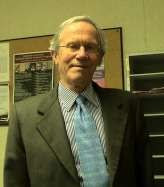
An interview with Clinton Cowan

Clinton Cowan a Candidate for Councillor in Ward 18

I recently interviewed Clinton Cowan on behalf of my community newspaper, Riverview Park Review. People living outside Riverview Park who might be interested in learning more about Mr. Cowan. Here is a copy of the article.

Clinton Cowan, a long-time resident of Alta Vista, is running for councillor in Alta Vista/Canterbury/Riverview Ward in the upcoming October municipal election. Clinton is a husband and father with a determination to improve the quality of living in Ottawa. Clinton has worked in the public, private, and non-profit sectors helping to build vibrant communities and he currently works in the field of labour relations. His education includes Carleton University - Public Administration and University of Ottawa - Communications. Clinton has served the community in many volunteer roles including: South-East Ottawa’s Community Health Centre; Ottawa Valley Autistic Homes; Byward Market Safety and Security Committee; CHEO, the Ottawa Food Bank and the Salvation Army.

Mr. Cowan made the decision to run for councillor in the upcoming election because he has observed that there is a broken relationship between the community and the current councillor. Clinton wants to work with residents to return strong leadership to City Hall by repairing the disconnect and using every avenue in keeping the people informed so that residents can participate in shaping our unique community.

Riverview Park Review asked each of the three candidates running for council in Ward 18 questions on several issues. Here are Clinton’s responses:

Some members of council have proposed that referendum questions on homelessness be included in the 2010 ballot. What are your thoughts about homelessness in Ottawa? “We have a tremendous amount of intellectual and, at times, financial resources available but we have challenges in addressing the populations at risk because of the competitive duplication in providing services. Competing, or near-competing, groups could be brought together to work on a strategic long term approach. Individual cases are unique, requiring a holistic consistent approach to people at risk. The most important thing we can do is to show individuals what support is available to them and where to find support. Interestingly, in Ward 18, one in four people lives at or below the government defined poverty line.”

What can be done to improve local transit links within the community and accelerate a comprehensive light rail plan for the city while making public transit affordable to everyone?
“Light rail dependent on expropriation is a symptom of poor planning. That approach cannot continue in our city if we hope to shape it properly for future growth.

“The greatest challenge is not where transit goes but who uses it. It is now a competition for people to decide whether to use personal transportation with personal music and climate control which contributes to traffic congestion and air pollution, or use the bus. To encourage ridership in the short term what is needed is an expansion of the Eco Pass program and to tip the balance in favour of transit use versus car use. If the current council were truly sincere about encouraging ridership, they would minimize new road building. A shift in the funding ratio is needed and this requires innovative thinking. There is a piecemeal approach to road use, development of corridors, and traffic. The new bus garage at Industrial Ave. and Russell Road will likely saturate roadways in the area but only token notice and communication to community have occurred during this major development. Communities are willing to share growing pains but they must be able raise awareness to what is not feasible or sustainable or acceptable to a community.

What are your views on intensification projects within the community? How can changes be effectively integrated while respecting existing communities (residents and infrastructure)? “Wonderful communities have developed over many years and intensification decisions need to respect the nature of communities. The City over-inflated projected populations within planning time-horizons. We must be honest about intensification targets and we must look at all the options if intensification is to be kept in scale with what we need and if we are to make it truly successful. There is a history of poor planning resulting in increased traffic, increased pollution and a community divided by major arterial walls.”

Some construction projects being funded under the governments’ Economic Action Plan have been fast forwarded so that they can be completed within the deadlines imposed. What are your views on this approach? “This financial opportunity was put in place to help mitigate the effects of a global crisis. We cannot ignore this; however the municipality should have requested an amendment asking that the city be allowed to implement its normal practices. Rushed projects provide minimal opportunity for community participation. Good decisions take time.”

What do you think can be done to build neighbourhoods where people can live, work and play? “Neighbourhoods matter. I am a supporter of sustainable communities that enhance quality of life. Currently I am working on a movement to increase the capacity of home care spaces in our community, which has one of the highest unfulfilled demands for spaces in the city. Changes in land use occur frequently and we rarely look at the need to support the current mix of residential, commercial, institutional land use that makes them sustainable. Not counting gas stations, Alta Vista has three convenience stores. The corner store does not exist. Walmart is not a corner store. There is a lot of room for improvement; any change must involve the community.”

Do you think that tax increases can be set at or below inflation with a balanced focus on economic, social, and environmental sustainability? “In an ideal setting it would be wonderful if there were no need for continual tax increases. However, the challenge to predetermining a tax rate does not account for the needs and wants of the community. Ottawa has greater needs than wants. We are looking at capital expenditures for our transit system, to resolve neglected waste water infrastructure, to build a new public library, and to develop Lansdowne. We need to take a look at what is needed today, to minimize stress on taxpayers. Currently we have a 3.7% increase to our taxes but we still have increasing user fees, including higher water rates coming shortly, and we have to deal with levy after levy. Most of it is money required to fix problems that should have been addressed or avoided a long time ago. It is apparent that we need a Fresh Start at the council table.”

Do you think that debate and citizen engagement on governance issues (amalgamation, borough councils, and ward councils) should be encouraged? “Should I have the honor of representing Alta Vista Ward I will make every effort to encourage community engagement, using every tool available to a councillor. The fact is that our city was not amalgamated by our choice. As a city we exist by a legislative act from the province. Dialogue must be brought up to the provincial level to initiate change. I have talked to community associations and business improvement associations across the city and it is clear that a lot more interchange between civic leaders and members of the community is needed.”

What are your views on the OSEG/Lansdowne Live proposal? Do you agree that projects of the magnitude of Lansdowne Live should be contracted on a sole-source basis and have so much financial risk transferred to the City? Do you think Lansdowne Live fits in with the neighbourhood? “At this point we will likely never know if this proposal represents the best possible use of this land. It is worrisome that the city has not looked at other alternatives. Do we have the right eyes at the table? Seven of ten architects review panel resigned. In a hiccup our councillor was able to pull his team from across country; locals are only minimally involved. Will they do this with other developments (e.g. the downtown tunnel)?”


At all levels of government voters complain that they only hear from their elected representative at election time. What would you do to engage community members regularly, to listen to their concerns and to respond constructively? “As a candidate I believe I have broken new ground for how residents can become and stay involved and I will provide uncensored opportunities for people to communicate, not just on election day, every day. That commitment is on my website (http://www.clintoncowan.ca/). I make the effort to come to people; I do not expect them to take time off to come to me. I will attend community associations and I will always try to maximize opportunities for community engagement. I have the commitment, the vision and the energy to bring City Hall to the people.”

Wednesday, May 26, 2010

The Plasco saga continues

Only a few days ago we learned that Plasco and the City of Ottawa were poised to sign a long-term deal to develop and operate a garbage-to-energy plant. However that all seems somewhat premature now (Exhaust fumes stall Plasco project, Kate Jaimet, Ottawa Citizen, May 25, 2010).

Firstly I was astounded to learn that the demonstration plant’s five engines that are fueled by the vapourized garbage gas have achieved a total running time of only 85 hours since operations began in January 2008. Apparently the engines have been shut down frequently for extended periods because Plasco has been unable to keep exhaust pollutant levels below provincial ministry limits. The ability of the Plasco technology to work within acceptable limits has always been a concern and now the scope of the problem is becoming clearer.

Some of the concerns I expressed in an earlier post (Plasco Fiasco) appear to hold more than a grain of truth. The concept of converting waste to energy using plasma gas technology is controversial because:

1. it is an unproven technology with potentially dangerous long-term effects resulting for emissions of micro-particles into the atmosphere;
2. it discourages consumers from practicing more environmentally friendly waste conservation methods; also,
3. the cost effectiveness of generating energy from domestic waste in this way remains questionable.

If the city prematurely signs on to a contract with Plasco CEO Rob Bryden it is taking on a huge risk and could well end up with a huge white elephant on its hands. The Plasco Fiasco post also notes that Bryden has a track record using other people’s money to run his businesses, usually managing to run them into the ground or sell them off for a loss.

Friday, January 15, 2010

City handling of public consultations on development projects is less than fair

On January 11, 2009, along with a number of Riverview Park residents and people from outside the community, I attended an open house to review and respond to an amended environmental assessment that will facilitate expansion to the OC Transpo Garage that is currently under construction on Industrial Avenue.

The site currently under construction will accommodate some 145 or more articulated buses and the planned expansion is to provide parking space for an additional 80 buses. The first phase of the project is now well advanced and a new garage facility is projected to start operations this fall.

The open house specifically addressed the expansion but many of the Riverview Park residents attending were quite surprised to learn about the size and the potential impact of the facility that is currently approved and under construction.

People expressed concern about potential noise and air pollution. Heavy bus traffic along Industrial Avenue at certain hours is also a concern as well as the number of busses idling for long periods before going into service.

Councillor Peter Hume sent out community invitations to this event, but apparently many residents living closest to the new facility did not receive them. Councillor Hume was in attendance. There were a number of OC Transpo representatives and City consultants present to address specialized concerns - noise levels, pollution levels, architecture, etc. These people went to some length in describing the detailed analysis they had performed and the measures that will be introduced to mitigate undesirable effects.

One factor revealed by the consultants is that the planned facility meets all provincially mandated standards for an industrial facility. The problem is that this “industrial facility” is immediately adjacent to a large residential community. The community will likely be seriously affected by the facility in many ways and the city does not seem inclined to do much more to mitigate them. Rather, it appeared that the City (Councillor Hume at least) is more interested in mediation – providing other facilities/services in the neighborhood (sidewalks etc.) that will do nothing to mitigate damage to residents’ quality of life and home values from noise and pollution.

Information on the project was presented on storyboards but there were no handouts to take away, the information is not immediately available on-line, and the unrealistic timeline for submitting comments (January 29, 2010) was not clearly identified. Fortunately, Riverview Park Community Association (RPCA) was able to obtain electronic copies of the storyboards from the consultants after the meeting. Time is of the essence for this project and OC Transpo wants to move on quickly and damn the torpedoes.

OC Transpo did not invite anyone from the consulting group doing an environmental assessment for the proposed Cumberland Bus Transit-way to the open house. This is disturbing as the preferred route for the transit-way encroaches on the bus garage expansion being planned. Neither have they held proactive meetings with RPCA or communicated with them throughout the process?

It has taken nearly 8 months for this open house to be arranged. The consultation process is reminiscent of that used for Lansdowne Live. It is interesting to contrast this to the speed with which Councillor Hume moved when it was learned that a site for parole office was being considered on Industrial Avenue.

Many residents left the open house feeling less than happy and are unsure of the next step. Fortunately RPCA was well represented at the open house and they are following up aggressively on a number of issues.

Questions beyond specifics of the site that need to be answered include:
- How was this proposed garage presented to the public in the first place?
- What of the specifics of bus ingress and egress to/from the OC Transpo site?
- Why is the process for consulting with local stakeholders not more proactive?
- Why was a site with close proximity to an established residential area selected (the existing OC - Transpo Garage and St. Laurent is located in an area that is exclusively industrial)?
- Is any OC Transpo follow-up with members of the Riverview Park community planned?

Monday, December 14, 2009

Nothing wrong with banning corporate and union donations

I don’t understand the concern that Jim Watson or anyone else has about a proposed ban on municipal (and provincial) election campaign donations (Cullen, Watson conflict over ban, Lee Greenberg, Ottawa Citizen, September 14, 2009). The article indicates that business owners have already found a way around corporate donations by making individual donations instead. In Ottawa I have also noted that other company executives and senior managers also make substantial campaign donations.

This makes it a little more difficult to track down links between companies and donors, but it can be done; Google is pretty helpful! I recall that Ottawa City Council passed a motion this year requiring candidates to provide a list of their campaign donors within 4 weeks of the election date. Presumably, they will be required to update this list at the end of the campaign as well, so that citizens can vote with full knowledge of candidates’ campaign donations? I hope I have this right?

In the article Robert MacDermid notes “…The 2003 Liberal campaign platform dedicates an entire section to ‘reducing the influence of money in politics’” MacDermid also says “…the McGuinty Liberals have become dependent on corporate donations and are unlikely to ban them in Ottawa and elsewhere. 'They would look incredibly hypocritical if they banned it at the municipal level and didn’t ban it themselves’…”

The only immediate solution is for City council to take steps itself as Toronto City Council has already done.

Wednesday, November 25, 2009

Corporate donations to municipal election campaigns

The issue of corporate donations to candidates campaigning for office at municipal and provincial levels has been a concern of mine for a long time. At the federal level Elections Canada took steps to eliminate corporate donation some time ago. Why are the two lower levels of government not introducing similar legislation?

If the province introduced income tax credits at the municipal level, similar to those that already exist at federal and provincial levels, more people would consider donating to municipal candidates’ campaigns. This in turn might result in renewed levels of interest in municipal elections and help increase the number of voters who turn out.

It was disappointing, though not surprising, to learn that Ottawa City councillors have turned down yet another opportunity to speak to the provincial government on this issue (Bid to ban corporate, union donations fails, Patrick Dare, Ottawa Citizen, November 24, 2009). A motion by Councillor Alex Cullen to ask the province to prohibit such donations was defeated by a vote of 4-6 by the audit, budget and finance committee.

Dare’s article notes that only five councillors out of the 24 on council do not accept corporate donation and union donations. However, at least one member of this group of five receives a substantial amount of donations to his campaign from individual owners, executives and senior staff of corporations, primarily developers. Interestingly, this individual voted in favor of Cullen’s motion.

New municipal election rules that are being considered by the province will put a limit on the maximum value of contributions that any individual, corporation or other organization can make. But this does not prevent a large number of individuals with ties to a particular corporation or organization from donating. This defeats the intent of the proposed legislation.

It’s time for this issue to be cleared up once and for all. No matter how much councillors take offence and protest that their votes cannot be bought when challenged on this issue, the perception will always be there. We just need to remove the temptation.

Friday, October 30, 2009

Hydro-Québec’s purchase of NB Power raises serious concerns

This is not a municipal issue but it grabbed my attention as it highlights problems with governance in Canada. Are we a country, or just a bunch of provinces looking after their own interests?

This week news emerged about a deal between Québec and New Brunswick (Hydro-Québec buys NB Power, Ottawa Citizen, October 30, 2009). Québec Premier Jean Charest announced this $4.7 billion deal with New Brunswick for Hydro-Québec to take over most of NB Power’s assets as a move to get greater access to energy-hungry markets in the United States. Charest stated “We see in front of us a unique opportunity with what is happening in the United States. The Americans need clean renewable energy and they need lots of it. And guess what? We in Canada are the ones who can supply it.”

Well guess what else Premier Charest: other Canadian provinces need more clean renewable energy too! In particular Ontario is planning to spend a fortune in the coming years, so that it can shut down its coal fired generation plants. Controversially, in addition to exploiting new power generation from renewable sources, it also plans on spending a fortune for power from nuclear plants.

So why not consider doing a deal with Ontario before exporting all this clean energy? Free trade issues aside, Canada needs to cut back on pollution and the money Ontario could save by minimizing investment in new power generation could help get the province and the country out of deficit. Surely this huge hydro-electric energy resource should be used to maximize benefit to Canadians before reserves are sold to the U.S.

Wednesday, October 28, 2009

H1N1

It’s difficult to comment negatively on a major initiative in the city that is providing urgent protection for citizens. Front-line workers (nurses and other officials) are working hard to immunize people against the H1N1 pandemic, but the process initiated by the city’s public health authority has some serious flaws. Efforts and plans being made by multiple levels of government authorities involved in the process seem to be uncoordinated and their priorities are not always consistent. Coupled with this, the media is overzealous on the issue and reporting is often inaccurate and inconsistent.

With a limited initial supply of vaccine available from the start, the primary goal should be to inoculate health care workers first. This could have been done more effectively if initial supplies of the vaccine had been sent directly to hospitals, clinics and other health care facilities (paramedics, etc.). Steps should also be taken to ensure that individual family doctors are inoculated. Extending the priority list as the city has done, without an adequate supply of vaccines available and with only a few injection sites available has resulted in long queues, and serious confusion.

There is no question that this issue is being over-reported by the media. This is resulting in conflicting and inaccurate information being reported on the radio, TV and newspapers. As an example, exact information on who is included on the priority list for early vaccinations has not been communicated accurately by the media and this is still a confusing issue. A report on CBC television indicated that turning up for an injection if you were not on the list would result in one being turned away. Firstly it is unclear what the list consists of:
* Is it just the list of categories (health care workers, pregnant women, young children, adults in high risk categories, etc.)?
* Or is it a list with named individuals?
If it is the former, the decision as to who qualifies is being left in the hands of individual members of the public. If it is the latter, this is personal information, where did this information originate? The public health authority is also responsible for much of the confusion here. Their approach has not been clear or consistent.

It is unclear why vaccinations for the general public are not being handled in the same way as seasonal vaccinations at family doctors’ offices. This would significantly reduce the pressure on public vaccination sites. Public sites present their own special problems; bringing such large numbers of people together in one location for extended time periods increases the possibility of cross-infection before people are vaccinated and before immunity becomes effective. As healthy school aged children appear to be particularly vulnerable to H1N1, why are vaccinations not being made available in school? These measures would all help to relieve pressure on public sites and reduce waiting times to manageable proportions.

Public health authorities are learning from some of these early mistakes and are implementing some of the measures noted here. If all three levels of government were to work together more closely during the planning and preparation stages of a crisis many of the current problems could have been avoided altogether. Effective cooperation between multiple levels of government continues to be a serious problem in Canada, particularly within the Province of Ontario.

Wednesday, October 14, 2009

Urgent need to update the Municipal Elections Act

Longstanding concerns over allowable municipal election campaign contributions from within the development industry are the focus of an article in today’s Toronto Star (Municipal Elections Act need urgent update to curb abuses, Robert MacDermid, The Star, October 14, 2009). The article addresses the Greater Toronto Area (GTA) and surrounding municipalities but the points that arise are applicable elsewhere in the province, including the City of Ottawa.

I quote fairly extensively from the article in the following paragraphs in order to make my point. In recent election campaigns a large percentage of City of Ottawa Councillors accepted donations from developers and from individual owners, executives and senior employees within the development industry. The parallels here with the situation in the GTA are very clear.

Quoting from the article:

“The City of Toronto auditor's report showed that 29 of 45 elected members of council violated the campaign finance reporting laws. And the Star's long-running campaign has pointed out abuses in municipal elections…There is evidence of the pervasive influence of the development industry in electing municipal council members. In Brampton, Mississauga, Oshawa, Pickering, Richmond Hill and probably Vaughan more than 50 per cent of the money for council members' 2006 campaigns came from the development industry. And 28 of 132 winners in 10 inner-GTA municipalities gathered more than 66 per cent of their campaign cash from the development industry.”

Several Ottawa City Councillors have noted that the maximum allowable campaign contribution limit ($750) is too low to possibly influence a Councillor’s vote were they prepared to be bought. However, as the article notes “ it will get access to a councillor and, when coordinated with other contributions, it ensures that some, or even all, council members are favourable to development proposals – no matter how dysfunctional from an urban planning perspective.”

MacDermid states that:

“You would think that the parade of municipal representatives to the courts for violations of campaign finance law would have spurred Municipal affairs Minister Jim Watson yo reform the Municipal elections Act

“...The minister's reform package, if it is passed in time for the start of elections in January, is likely to be piecemeal and allow little or no time for public hearings.

“It is expected that he will raise the expenditure limits. This is something that incumbents want because it raises the bar for challengers – but the legislation should encourage challenges. Incumbents already have an advantage over challengers. Moreover, 75 per cent of 674 candidates in 10 GTA municipalities had total expenditures in 2006 that did not surpass two-thirds of current limits, so there is no need to raise them.

“More fundamental reforms are needed to end the embrace of the development industry. The stakes are high. Municipal councils create profits for developers by rezoning and servicing land and current residents subsidize new development because developments charges are too low. Campaign contributions from corporations and unions should be banned from municipal politics, as they are in federal politics and Quebec and Manitoba provincial politics.

“It is not just that corporate money is prevalent but as long as big companies have the right to make campaign contributions, it allows the owners to give in their own name and then direct money from one or more companies as well.

“…These are some other reforms that are essential to make municipal elections open and transparent.

- “The minister should change the law to prevent winning candidates carrying forward surpluses that give them a head start over challengers at future elections.
- “He should require that municipalities form compliance audit committees so that citizen complaints about campaigns go to an independent tribunal rather than council members who, all too frequently, have declined to investigate their colleagues.
- “He should limit the number of contributions someone can make to five. For example, the Greater Toronto Sewer and Water main Contractors' Association gave to 95 candidates (72 of them elected) in 10 municipalities in 2006.
- “And he needs to close the most egregious of loopholes, allowing companies to pay employees while they work on campaigns without the expense being considered a contribution from the employer.

“All these reforms are badly needed to restore credibility to the municipal democratic election process.

“The McGuinty government was elected on the promise of democratic reforms. There is no better place to show that commitment than by enacting meaningful changes to the Municipal Elections Act before the starting bell for campaigns rings in January of 2010. The time is short and the need to restore legitimacy is great.”

People I have spoken within the City of Ottawa would like Minister Watson to go even further by allowing contributions only from voters.

Tuesday, October 13, 2009

Lansdowne Live is not the only sole-source plan that is alive and well in the city of Ottawa

It appears that Lansdowne live is not the only example of blatant sole-source contracting in the City of Ottawa. It has come to my attention recently that by-passing the City’s procurement rules has become a convenient short-cut by the City to fast-track projects and to help keep them from public scrutiny. Here are a couple of recent examples that also appear to break other rules:

The City of Ottawa’s $47.7 Million Terry Fox Drive extension, funded under the Infrastructure Stimulus Program is purported to be "shovel ready." However it appears that the City was in no way to proceed with this project when funding was announced. In order to have a faint hope of starting construction of some portions of the project within timelines of the funding program, the City sole-sourced a $1.9 Million engineering contract to Dillon Consulting. That's right, $1.9 Million sole-sourced (See Page 47 of Document 1 in June 16, 2009 Corporate Services Committee Report: http://www.ottawa.ca/calendar/ottawa/citycouncil/csedc/2009/06-16/08a%20-%20ACS2009-CMR-FIN-0021%20-%20DOC%201.pdf)!

The project traverses 1.5 km of Carp River floodplain and is likely unprecedented in the Province of Ontario in terms of the amount of floodplain storage that will be displaced since the Flood Damage Reduction Program was introduced in the 1970's. Under this program the three levels of government signed an agreement that they would not build, fund or approve projects where floodplains had been mapped (http://www.ec.gc.ca/Water/en/manage/flood/e_agree.htm#1)

The site of the project lies just downstream of a flood damage center, on a reach of the Carp River where an Order of the MOE Minister has been issued. The City has not yet responded to the conditions set in the Minister's Order. So why is this project being funded?

Secondly there is a $510,945.69 sole-sourced contract awarded to Novatech Engineering for the $65 Million Hazeldean Road Expansion Project that includes building new bridges over the Carp River: (See Page 89 of 100 Page Document 1, available at: http://www.ottawa.ca/calendar/ottawa/citycouncil/csedc/2009/10-06/04%20-%20ACS2009-CMR-FIN-0041%20-%20DOA%20-%20Apr%201%20-%20Jun%2030%20%202009-%20FINAL.htm).

Just like the Terry Fox Drive project to the north, the Hazeldean Road project overlaps with Carp River floodplain where issues about flood levels have yet to be sorted out with the MOE Minister. More concerning about the Hazeldean Road project is that it is just downstream from Glen Cairn where hundreds of homes flooded on July 24th, and the City is not expected to complete its investigation until summer 2010 of what caused the flooding, the third such incident for may residents over the last 13 years.

So again, why are these projects being funded through sole-source contracts?

Friday, June 12, 2009

The Official Plan still requires attention

Some see this week’s vote by Ottawa City Council to cut back on the urban boundary expansion originally proposed by city staff as a small victory. However, it does nothing to address the need to radically change the overall plan that is really required. At the moment, this city is really being planned by the developers and not by the city (Development Plans lack proper direction. Randal Denley, Ottawa Citizen, June 11, 2009).

A well thought out Official Plan will provide for the development of communities that are more self-contained; communities in which a majority of residents can live, work and play. This requires a long-term vision as well as a high level of consultation and cooperation by all three levels of government.

Let us hope that in the five year period until the next mandatory (did someone say arbitrary?) review of the plan that council undertakes serious consultations with its provincial and federal counterparts and also directs city staff to rethink the planning process.

Sunday, April 12, 2009

Deja vu all over again

The Ontario Municipal Board (OMB) ruling of the proposed Minto subdivision in Manotick (OMB ruling outrages village residents, Maria Cook, Ottawa Citizen, April 11, 2009) reminded me of a similar ruling by the Ontario Minister of the Environment with regard to the Alta Vista Transportation Corridor (AVTC).

With regard to Minto’s Mahogany subdivision, Brian Tansley, president of Manotick West community association, notes "Disappointed would be an understatement, we lost big time. Every single point that we raised was ruled down…The primary disappointment is the lack of justification for the ruling. In a legal document there's references to prior rulings to provide rationale for decisions. There were none of those.”

In the AVTC case many community groups, spearheaded by Citizens for Healthy Communities (CHC) and the Sierra club of Canada worked for many years to highlight environmental, induced traffic, economic, public transit and other community concerns surrounding the proposed development. Despite this, the minister ruled down every single point raised by the community.

These are two examples of governments, municipal and provincial, failing to treat community concerns seriously. In both cases public concerns were simply discounted in the interests of developers.

Tuesday, March 31, 2009

A great public forum on city governance

Councillor Clive Doucet sponsored an excellent forum, “Governing Ottawa Better”, last evening in the council chamber at City Hall. It was very well attended; there was a well informed panel of speakers; and there was lots of opportunity for individual citizens to speak and make their views known.

I think that a majority of people attending were likely in favor of some form of re-amalgamation of the city from its present structure. However, we also learned that getting the mission accomplished might not be easy.

There a couple of ways that a re-amalgamation (sounds more positive than de-amalgamation!) could be pursued by:

- local referendum or
- direct legislative change initiated by City Council.

Both options have pros and cons, but either way the provincial government has to buy in. The past history of attempts to de-amalgamate in the Province of Ontario shows that the government has rejected past attempts on the basis of uncertainty regarding fiscal sustainability, adverse property tax shifts (property tax fairness) and lack of council endorsement. Any proposal to change the present municipal structure would have to address the first two issues effectively. This requires a lot of effort.

If this initiative moves forward Clive and his team will need a lot of help and support.

If you are willing to help lobby your local MPP for municipal reform in Ottawa, or participate in working groups looking at alternate governance structures, please visit Clive’s web site. Electronic copies of a governance questionnaire are also available at Clive’s web site: http://www.clivedoucet.com/.

Thursday, March 5, 2009

Ontario’s Proposed New Green Energy Act

Following is the original text of a letter to the Ottawa Citizen from Dick Bakker, CEO of the Ottawa South Green Party EDA. The letter published March 4, 2009 was edited because of space limitations. The full original text is included here.

Re: McGuinty’s mighty wind.

Randall Denley, Sunday March 1, 2009

The proposed Green Energy Act (GEA) is the start of a fix to Ontario’s electrical albatross. Rather than focus on hot buttons like home energy audits, windmills and bureaucratic deregulation the public should be looking at the intent of the Act and where similar efforts have been successful.

As a Green Party member I am quite pleased to give credit where credit is due and put partisan views aside for a moment. I am not great supporter of Messer’s McGuinty and Smitherman, but I am fully behind them on this.

What is the state of our present electrical system? Taxpayer subsidized consumers, nuclear overruns/underproduction, never-ending debt retirement charges, centralized power generation ensuring 10-20% transmission power loss, and dirty coal plants. What to do? How will Ontario get reliable estimates for new nuclear or coal plants in this climate of tight credit? Who will deal with any cost overruns? The taxpayer of course! Again!

The GEA is an omnibus Act intended to tilt Ontario’s energy production from big centralized power facilities towards a decentralized model. The Act calls for a plethora of Renewable options; bio-mass, bio-gas, geothermal, bio-fuel, tidal, run-of-river hydro, co-generation, wind and solar. It encourages Co-ops, native bands and property owners to become generators. Municipal, building and environmental regulations are to be streamlined, enabling speedier development of Renewables. Conservation will finally be a core objective of all government.

Feed-In Tariffs (FIT) are a key component. FIT’s are a method to kick-start the Renewable sector on a ‘performance only’ basis; no money is paid without delivered energy! Fixed rates are guaranteed for up to 20 years and tailored to the generation technology, with guaranteed grid access for the producer. This encourages smallscale production, the development of a distributed grid and localized employment. As of 2007 over 44 jurisdictions had implemented FIT’s; Ontario is the first in North America.

The GEA is based on Germany’s Green Energy Act and Feed-In Tariff success. Over 8 years Germany added 31,000 MW of NEW Renewable Energy to their electrical grid. This in a country with a higher population density and fewer natural resources than Canada! The sector employs over 280,000 and is the world’s leading renewable technology exporter. The incremental cost of this capacity has added only 36Euro/year ($50Cdn) to the average German consumer. In 2000, Germany’s renewable energy share was 6%, growing to 15% in 2008; and growth is accelerating FIT rates are regularly lowered to reflect industry learning curves and cost reductions.

Germany has introduced more new renewable power production in 8 years than Ontario generates from all of its nuclear stations, which were built (and refurbished) over the last 40 years! Renewable costs drop every year, input costs are near zero!

Wind and solar now deliver less than 1% of Ontario’s production. What was it 2 years ago? World wind production has been growing at an annual rate of 30-40% for 20 years? Solar has been growing at a rate of 50-70% over the same time! It is time for North America to catch up.

Wind is intermittent, but it is always blowing somewhere and the cost of wind power has been dropping for years. Hydro is a natural partner technology to wind and Quebec’s hydro grid should be interconnected with Ontario’s to provide the natural backup. Solar of course, is only available when the sun shines, this happens to match the point in the day when we have peak energy demand. Therefore, every new solar electric capacity reduces the need for expensive peak time production. The other technologies mentioned have different production profiles, and can each add to the electrical mix in different ways.

Smitherman is probably wise to back off on the house Energy Audit requirement. This is not the time to get realtors and house sellers upset when they are focused on dropping home values. The Audit provision is an excellent means to get home owners to take energy conservation seriously. There are other ways to get this done that will not directly raise the hackles of a stressed out Realty industry. In order to get this law passed the government may need to placate widespread political opposition, they can give in a bit, but not on the core intention of the Act.

Otherwise, I do not see significant changes needed. The bylaw, building code and environmental regulations must be tailored to favour small localized energy production, rather than the present indirect reinforcement of large centralized and expensive plants.

The alternative to small renewable projects scattered across the province would be more large Nuclear/Coal/Gas facilities with government guaranteed insurance and taxpayer funded cost overruns. The Ontario Government is still planning to proceed with nuclear expansion. This is wrong, expensive, dangerous and inefficient.

The Green Energy Act is the start of necessary improvements to the Ontario electrical system. Let’s give McGuinty and Smitherman credit for this move. There is a lot of work and opportunity before Ontario as this Act gets implemented. More ‘Work’ and ‘Opportunity’ is what Ontario needs today.

If we can get a few years of good growth similar to Germany’s experience, the justification for nuclear expansion will wither.

Saturday, January 24, 2009

Some musings on the OC Transpo strike

The transit strike is now into its 46th day with no apparent settlement on the horizon. There is no doubt fault to be found on both sides but I am particularly concerned about the city's side of the debate and the poor leadership being provided by mayor Larry O'Brien. Council appear to be united behind him; something that would normally be considered laudable, but in this case is an unfortunate mistake.

Only one councillor, Clive Doucet, has taken any initiative to stand up to the mayor and even he was made (forced) to withdraw his comments, apologize and get back in line.

Because all council deliberations on the strike are being held in camera it is not possible to learn the positions of individual councillors. Contacting my own ward councillor (Peter Hume) revealed that "..City Council by unanimous resolution has designated spokes persons with respect to various aspects of the dispute and I am not one the spokespersons and I will abide by the unanimous will of Council" - wonderful!

The federal government has indicated it will not force strikers back to work at this time and that the two sides should come together and negotiate an agreement. What I don't understand is why this is so different from the last Toronto transit strike when the provincial government made transit an essential service and had transit workers back at work in short order.

I hope we all remember this come election time in 2010, "its time for change" - a mantra that is very popular nowadays!

Monday, December 29, 2008

The Next Mayoralty Campaign

Its early days yet but according to Ken Gray in the Citizen on Dec 26 (Handicapping the next mayor) things are warming up. Gray attempts to handicap those he sees as lead contenders in the next mayoralty race. I was particularly interested reading his comments on one of the favourites.

“Peter Hume: The early favourite. A red Tory, the Alta Vista councillor would be able to mobilize much of the Conservative machine in Ottawa. And he counts Munter, so he has wide appeal. A great conciliator and deal-maker on council, he will need to be a superb fundraiser because he is not a wealthy man. Mr. Hume is so eager to run you expect see him covered in green paint around city hall after making election signs in the basement all night.”

In a recent post I commented on sources local councilors receive funding from to support their campaigns and the potential for serious conflict of interest. Peter Hume is one of several candidates identified in the 2003 and 2006 campaigns whose funding sources include a high percentage of contributions from firms and individuals that have business interests that might benefit from future council decisions.

Hume did particularly well in this area. In the 2003 campaign at least 71% of $26,999 in contributions came from corporations or individuals with direct interests in future developments within his ward and within the city as a whole. In the 2006 campaign there were no direct corporate campaign contributions but at least 62% of $27,062 came from individuals whose firms/employers might benefit similarly.

So, if Peter Hume decides to run for mayor, as most believe he will, he should have little difficulty raising funds. Many of the sources he has used in previous campaigns will be more than pleased to help out and maximize their contributions.

The sad fact is that this is all perfectly legal according to current provincial/municipal laws. It is disturbing that provincial laws allow contributions of this nature when strict measures to prevent implications of inappropriate election contributions are in place at the federal level. The time has come for the Province of Ontario to act on this issue too.

Sunday, December 7, 2008

Municipal Election Contributions Ethics - 101

Government of Ontario’s municipal election law currently permits contributions by corporations and unions provided they are registered within the province. Contributions from individuals are also allowed, provided that they reside in the province and that recovery of contributions is not being made from a company or employer.

Firms and individuals that have business interests that might benefit from future decisions (e.g. votes in council) by persons standing for election are therefore permitted by current election law. Accepting contributions from these firms and individuals puts councilors in a conflict-of-interest situation and at worst might lead to accusations of bribery and corruption.

In recent elections a large percentage of contributions to several councillor’s campaigns came from corporations or from individuals with direct interests in future developments within the ward or within the city as a whole. This includes individuals who are owners, executives or senior managers in these firms.

Some councillor’s election campaign contributions show no direct corporate donations to their campaign. But indicate a large percentage of contributions from individuals whose firms/employers might benefit in the manner identified above.

It is unfortunate that individual councillors are not considering the ethical dilemma they place themselves in when accepting contributions from prominent individuals whose firms or employers might benefit from later decisions and action taken by city council. This is especially the case when one considers that policies regarding gifts and entertainment to city staff by firms/people doing business with the City have been tightened up in order to avoid appearance of conflict of interest.

It is very disturbing that provincial law allows contributions of this nature at both provincial and municipal levels. Stricter measures that reduce implications of inappropriate election contributions are already in place at the federal level.

http://www.ottawa.ca/calendar/ottawa/citycouncil/occ/2005/06-08/ACS2005-CCS-CSE-0006-DOC-1.htm

Friday, June 27, 2008

A request for Assistance from the Province of Ontario

I wrote a letter to the Mon. Jim Watson, MPP (Ottawa West - Nepean), Minister of Municipal Affairs asking for assistance addressing potential conflicts of priorities regarding the building of new roads needed to service an ever growing Ottawa Hospital complex at the General Campus site. This is contrary to "smart growth" and the city of Ottawa's "Vision 2020" planning principles that encourage use of public transit, alking and cycling options instead of drivivng.

The need for this new road has been the subject of challenges by citizens groups for a number of years. however City Council elected to proceed with the project and it is currently in the design phase. A local councillor (Peter Hume) claims that the road is needed because of expected growth of the Ottawa Health Sciences Centre that is expected over coming years. It is unclear to me, and many others in the community, what the urgency is to complete this "hospital link" given that no development of ajacent hospital lands can take place for several years and that planned changes to transit in the area might well resolve existing problems anyway.

Further, the Province of Ontario's plan to expand health care services at one site that is far away from where constituents live and increasingly work is questionalble at best. The cost of the hospital link is estimated at $65 million (more likely $100 million). This money could go a long way to building urgent care and other small hospital facilities in suburban areas where they are most needed. This would reduce the transit strain on the hospital lands and likely extend their development shelf life into the next century.

It is clear that different Provincial government departments do not consult closely together when making expansion plans. Unfortunately, the city appears to accept Provincial planning decisions without practicing due diligence. This results in bad planning decisions on the city's part: building roads that might not be needed and reducing the effectiveness of its public transit systems for the long term.

Investigation of this issue also requires consultation with other Provincial government ministries including Health & Long Term Care as well as Infrastructure.