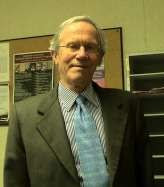
Yesterday afternoon I had the pleasure of speaking with Clinton Cowan. Clinton, a long-time Alta Vista resident, is running in Alta Vista/Canterbury/Riverview Ward to ensure that our next city council includes respect for residents and their issues. He is focused on unifying our unique community neighborhoods and ensuring they are informed and involved in shaping the city towards a brighter future.
He speaks every day with ward residents and expects to meet with everybody in the ward before the October 25 election. Clinton says that an increasing number of Ottawa residents feel that during the past four years, the city has not worked in favour of it’s citizens. He says that over the coming months he will continue consulting with community residents to discover what are the top issues affecting Ward 18.
Clinton is running to preserve our neighborhoods, protect our values and promote our issues. His Fresh Start campaign is aimed at uniting our neighborhoods and bringing respect for the community back to city hall.
Clinton Cowan has worked in the public, private and non-profit sectors to help build vibrant communities. Raised in Ottawa, Clinton is a husband and father with a determination to improve the quality of living that Ottawa has to offer. His vision is to build an inclusive and accessible city that respects its citizens, and to ensure that essential services are delivered effectively and efficiently.
Clinton is a leader in the field of labour relations, and his ongoing success in dispute resolution and conflict avoidance practices continues to build lasting solutions for complex issues. His education experience includes Carleton University - Public Administration and University of Ottawa - Communications. His skills in these areas will provide great value in understanding the merits of programs and policies at City council, and establishing a real two=way dialogue with residents.
Clinton already serves the community in many volunteer roles including:
South-East Ottawa’s Community Health Centre;
Ottawa Valley Autistic Homes;
Voiceprint, providing the visually impaired with in depth news information;
Byward Market Safety and Security Committee;
CHEO;
The Ottawa Food Bank; and
The Salvation Army.
I found Clinton to be respectful and easy to talk to. His pleasant outgoing manner encourages one to engage in conversation. It quickly became clear that he understands the important issues at city hall and in Alta Vista, Canterbury/Riverside and he has some interesting/exciting ideas.
You can find out more about him on his website http://www.clintoncowan.ca/. His platform will be unveiled progressively on his website over the coming weeks.
He can be contacted by E-mail clinton@clintoncowan.ca,
by phone at 613-680-7601
by mail:
Clinton Cowan Campaign
2706 Alta vista Drive, Suite 310, Ottawa, ON, K1V 7T4
Showing posts with label Carleton University. Show all posts
Showing posts with label Carleton University. Show all posts
Thursday, April 22, 2010


Sunday, October 25, 2009
The Role of Community Associations
Last Wednesday I attended the annual general meeting of my local community association. Guest speakers included our local MP David McGuinty who actually had to be cut off by the MC because his speech was too long (Why can’t elected representatives give apolitical speeches?). Our local councillor, Peter Hume, also attended to present well deserved community volunteer awards on behalf of the association.
Due to another local community association event, Hume could not stay for the main event, a talk by Professor Christopher Stoney from Carleton University on how community associations influence local decisions. This is unfortunate because he could have learned a thing or two about the effectiveness of bottom-up, grass roots democracy.
Because of the excessive amount of time occupied by McGuinty’s speech, Chris Stoney had to cut back on the scope of his talk, but he still managed to do a very effective job. His abridged talk raised a lot of questions from the audience. In addition to outlining his research into community governance, municipal government and citizen engagement he also addressed the topics of infrastructure projects and multi-level governance.
He spoke on some local government initiatives including Light Rail (LRT), Lansdowne Live and Hintonburg neighborhood renewal. He also addressed the effectiveness that Neighborhood Planning Initiatives (NPI) can have on the outcomes of city projects that effectively engage local communities. NPI is “….a new integrated planning process that will better utilize city resources and provide value-added services to the citizens of Ottawa through their involvement in the planning process.” (Internal EMC briefing document, March 2006)
Chris spent some time examining the degrees of engagement between governments and citizens. He provided some examples including work done in other countries. Here is an example from the Queensland Government in Australia:
· Information: a one-way relationship through which government delivers information to citizens.
· Consultation: a two-way relationship through which citizens provide feedback on issues defined by the government.
· Active participation: a collaboration through which citizens actively shape policy options, but where government retains the responsibility for final decisions.
Looking at these three levels of participation from a City of Ottawa perspective, in my view most issues are addressed by local government at the information-only level. Attempts to solicit and listen constructively to the views of citizens are token at best. However, recent issues in the city, notably Lansdowne Live, have energized the citizenry of Ottawa and the city has been forced to respond. How seriously the city’s response will reflect concerns raised by citizens remains to be seen. Other issues, like LRT, might eventually capture citizens in a more united way than they have in the past.
One of the roles of community associations is to provide an instrument through which citizens can unite to raise issues and concerns with their ward councillors and the city. Unfortunately, it does not always work this way. I have witnessed situations in which councillors try to use community associations as a platform for their own initiatives. This is entirely counter to the intended process. In some cases associations or individual members are actually chastised by their councillor for raising contrary views and ideas and they are punished in a number of way, one being withdrawal of support from community newspapers and other local initiatives.
For more information on Professor Stoney’s work on NPI initiatives visit http://www.cure-crfmu.org/
Due to another local community association event, Hume could not stay for the main event, a talk by Professor Christopher Stoney from Carleton University on how community associations influence local decisions. This is unfortunate because he could have learned a thing or two about the effectiveness of bottom-up, grass roots democracy.
Because of the excessive amount of time occupied by McGuinty’s speech, Chris Stoney had to cut back on the scope of his talk, but he still managed to do a very effective job. His abridged talk raised a lot of questions from the audience. In addition to outlining his research into community governance, municipal government and citizen engagement he also addressed the topics of infrastructure projects and multi-level governance.
He spoke on some local government initiatives including Light Rail (LRT), Lansdowne Live and Hintonburg neighborhood renewal. He also addressed the effectiveness that Neighborhood Planning Initiatives (NPI) can have on the outcomes of city projects that effectively engage local communities. NPI is “….a new integrated planning process that will better utilize city resources and provide value-added services to the citizens of Ottawa through their involvement in the planning process.” (Internal EMC briefing document, March 2006)
Chris spent some time examining the degrees of engagement between governments and citizens. He provided some examples including work done in other countries. Here is an example from the Queensland Government in Australia:
· Information: a one-way relationship through which government delivers information to citizens.
· Consultation: a two-way relationship through which citizens provide feedback on issues defined by the government.
· Active participation: a collaboration through which citizens actively shape policy options, but where government retains the responsibility for final decisions.
Looking at these three levels of participation from a City of Ottawa perspective, in my view most issues are addressed by local government at the information-only level. Attempts to solicit and listen constructively to the views of citizens are token at best. However, recent issues in the city, notably Lansdowne Live, have energized the citizenry of Ottawa and the city has been forced to respond. How seriously the city’s response will reflect concerns raised by citizens remains to be seen. Other issues, like LRT, might eventually capture citizens in a more united way than they have in the past.
One of the roles of community associations is to provide an instrument through which citizens can unite to raise issues and concerns with their ward councillors and the city. Unfortunately, it does not always work this way. I have witnessed situations in which councillors try to use community associations as a platform for their own initiatives. This is entirely counter to the intended process. In some cases associations or individual members are actually chastised by their councillor for raising contrary views and ideas and they are punished in a number of way, one being withdrawal of support from community newspapers and other local initiatives.
For more information on Professor Stoney’s work on NPI initiatives visit http://www.cure-crfmu.org/
Subscribe to:
Posts (Atom)